| |
Birding & Wild
Life
Uruguay, a
journey through the land of the Gaucho, fresh water and
colorful birds
 Uruguay
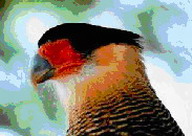
means in the natives language "River of the painted birds".
The country concentrates more than 400 species of temperate
areas birds that During the austral spring the have a very
intensive activity and, with an experienced guide are very
easy to see and admire. Uruguay
means in the natives language "River of the painted birds".
The country concentrates more than 400 species of temperate
areas birds that During the austral spring the have a very
intensive activity and, with an experienced guide are very
easy to see and admire.
Birding in the unknown Uruguay
|
|
|
The
unkown & fascinating Uruguay
Uruguay continues to be out of the itinerary of most
tourists. All travellers that arrive fall in love
with this safe country full of friendly people and
easy watching birds. Along the tour we will see
different provinces of the country and visit natural
reserves such as the “Humedales del Este”,
a huge complex of coastal wetlands, extending in a
north-south direction from the Brazilian border.
The site embraces the Uruguayan portion of the large,
international lagoon, Laguna Merín (shared with Brazil)
as well as the whole of Laguna Negra and Laguna de
Castillo, and parts of several rivers. The area is of
generally low relief, except for the dune barrier which
separates the wetlands from the Atlantic Ocean, and much
of the site is liable to seasonal flooding.
|
|
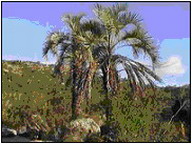
The region supports a now endangered, endemic palm
Butia capitata. The wetlands are
important for at least 17 species of migratory
shorebirds which breed in the Nearctic realm
spending the boreal winter in Uruguay, as well as
for locally nesting species.
|
In the “Birding Unknown Uruguay” tour, birdwatchers will be
able to:
-
See most South American temperate bird species in a single
trip.
-
See high number of bird families per day (from hummingbirds
to rhea).
-
Enjoy birding in a gentle countryside.
-
Cover all main environments.
-
Have an experienced and professional guide at your service
all day long.
-
(1 guide per 6 birders or fraction )- See guides references
after the day by day itinerary.
| Dates
|
Length |
Tour
cost *Double
occupancy |
Optional
single
supplement |
Group
size |
| Upon
request. Every sunday from Setember 15 to November 30 |
8 days
/ 7 nights
birding |
U$S
2.500 |
U$S
300
(limited
single rooms available) |
min
04
max 12 |
# Montevideo
airport
*Included
Guide(s) services; all accommodations; all meals;
mineral water; land transportation; routine tips for
meals & porters. |
*Not Included
Airfares, airport taxes; items of a personal
nature (souvenirs, phone calls, etc.); alcoholic drinks;
and medical insurance |
|
Extensions
in Uruguay (Montevideo - Punta del Este - Estancias),
Argentina (Buenos Aires - Iguaçu Falls ...) and Brazil
are easily arranged. |
 Accommodations: The accommodations provided in
this program include the most interesting estancias
(ranches) or inns available in the areas we visit, all
of which include private bathroom and are clean,
comfortable, charming and very attractive. You will be
able to get good night’s sleep in pleasant surroundings.
If you are sharing you room, please let us know in
advance if you prefer twin or double beds..
Accommodations: The accommodations provided in
this program include the most interesting estancias
(ranches) or inns available in the areas we visit, all
of which include private bathroom and are clean,
comfortable, charming and very attractive. You will be
able to get good night’s sleep in pleasant surroundings.
If you are sharing you room, please let us know in
advance if you prefer twin or double beds..
IMPORTANT NOTES
 Lares terms & conditions apply. Lares terms & conditions apply.
A booking is confirmed only upon receipt of the corresponding deposit.
We reserve the right to alter the itinerary due to circumstances beyond our control.
Appropriate medical insurance is mandatory and the responsibility of each guest/booking agent.
Guests comments and pictures may be use for promotion.
DAY BY ITINERARY:
Pre/post tour extensions in Montevideo, Punta del Este, Buenos Aires/Argentina & Brazil available. Please ask for details.
|
Day
1: Montevideo & Surroundings |
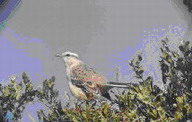 |
Arrival to Montevideo, the capital city. Guests
are met at the Carrasco International Airport
and driven along the wonderful coastline called
“Rambla” to the
Balmoral Hotel
or similar.
Optional city & birding tour and
introductory talk. During the evening we will
have dinner at the lively “Old City”. Overnight
at the hotel.
.
|
|
|
Day
2:
Punta del Este, Isla
de Lobos & Garzón
Lagoons |
|
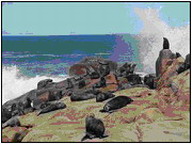
Early transfer from the hotel to Punta del Este
and boat visit to “Isla de Lobos” (Seal Island),
looking for shore and seabirds like Great Grebe,
Black-browed Albatross, Yellow-nosed Albatross,
Cape Petrel, Southern Giant Petrel, Olivaceus
Cormorant, American Oystercatcher, South
American Stilt, Greater Yellowlegs, White–rumped
Sandpiper, Snowy Sheatbill, Black Skimmer, Kelp
Gull, Brown-hooded Gull, Snowy-crowned Tern,
Yellow-billed Tern, and Royal Tern. Isla de
Lobos is the shelter for one of the largest
South American sea lions & fur seals colony.
After an excellent lunch at Punta del Este port,
birding at the coastal lagoons José Ignacio,
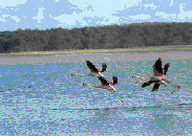
Garzón and eventually Rocha, looking for Chilean
Flamingo, Black-necked Swan, Coscoroba Swan,
Southern Wigeon, Brown Pintail, South American
Tern and Cayenne Tern. Short drive to Estancia
Guardia del monte or Los baguales both authentic working Uruguayan ranch.
Typical dinner and overnight at this charming
estancia.
|
|
|
Day
3:
Cabo Polonio, shifting
sand dunes & the Forest of Ombúes |
 |
We
will start our “Humedales del Este”
biosphere reserve trip
with
an early birding at the estanciaGuardia de Monte
on the shores of the Castillos Lagoon, searching
for Greater Rheas, Spotted Tinamou ,
Short-billed Pipit, Limpinks, White-necked
Heron, Striated Heron, Ringed Kingfisher, Snail
Kite and Roadside Hawk. We also visit, the Ombúes
Forest looking for Diademed Tanager, Blue and
Yellow Tanager, Hepatic Tanager, Chalk-browed
Mockingbird, Tropical Parula and Creamy-bellied
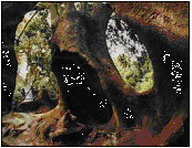
Thrush. The Ombú curiously rarely grows in
groups of more than 2 or 3, the forest of Ombúes
that we visit is possibly the only one in the
world. Each tree has its own wonderful shape
with thick, twisting roots spreading out over
the ground; some are over 500 years and have a
diameter of 2 metres (6 feet). Then we will be
driven by truck to Cabo Polonio, a small fishing
village which can only be reached by horse or
four wheeled drive. The fascinating part of the
area is the huge area of shifting sand dunes
where we can see good numbers of
seabirds in addition to the sea lions and
migrating Franca Whale that is commonly spot
during the south spring. Lunch at a
typical restaurant on the beach, Dinner and
overnight al La Perla seaside inn.
|
|
| Day
4:
Marshlands & the National
Park of San Miguel, the heart the “Eastern Wetlands” |
 |
Sunrise
breakfast and short drive to the “Laguna
Negra” (black lagoon); All of this area is
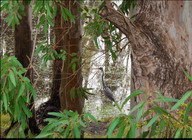
mostly covered by marshlands with plenty of
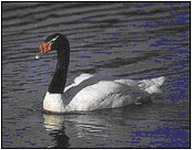
birds like de Black-necked Swan, Coscoroba Swan,
Ringed Teal, Brazilian Duck, Speckled Teal,
Bare-faced Ibis, White-faced Ibes and Plumbeous
Ibis, Spot-flancked Gallinule and
Straight-billed Reedhaunter. It is also a
stronghold for threatened birds like
Saffron-cowled Blackbird, Black-and-White
Monjita, Marsh Seadeater and White-collared
Seedeater. In the morning we wil walk into the
native vegetation on the hills from where we
will be able to enjoy an incredible view of the
unique extensive palm groves, the big lagoon and
the huge marshlands. Despite a number of
stories, no one knows how the palm trees got
here -some 300 years old; they give the
landscape a very exotic look. After a typical
barbecue at the black lagoon shores we will be
driven along a very scenic road to the
"Bañado de los indios" (Indians
marshlands) an incredible place full of birds in
the heart of the “Humedales del este”
biosphere reserve. Dinner and overnight at El
Fortín de San Miguel, right in the Brazilian
border.
. |
|
| Day
5:
The Cebollatí River & the State of “33” |
|
After a pleasant night at this inn built in the
same stone as the nearby Portuguese fortress we
will reach and navigate the Cebollatí River, an
important meandering river with a wide and well
conserved gallery forest. Here we will see good
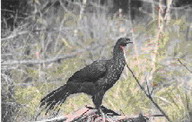
numbers of Limpinks, Ospreys, Herons, Snail
Kites and three different Kingfishers.
IIn
the afternoon we visit a large nest colony of
Roseate Spoonbill and Herons in Da Fonseca
Ranch, where a hide has been built. During the
afternoon, we will travel to the city of 33,
which takes its distinctive name from a crusade
from Argentina to Uruguay by 33 men in the early
1800’s. This movement led, four months later, to
Uruguay’s independence from the Portuguese.
Overnight at the local hotel (guests will be
able to enjoy the hot water pool of this modest
hotel).
|
|
| Day
6:
The
fantastic,
“Quebrada de los Cuervos”
|
 |
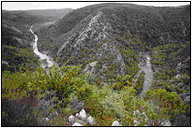
Full day visiting the famous “Quebrada de los
Cuervos”
(Vultures’ Ravine); the Yerbal Chico stream cuts
deeply into the rocky hills of this gorge. This
protected area is
considered the southernmost spot of Atlantic
Forest. We will enjoy some
trekking in the Quebrada; as we walk down, the
humidity rises and the vegetation gets really
dense.
In this unique area you can find 70% of
Uruguay’s native flora and over 100 bird
species. During
the afternoon we drive south leaving the
province of 33, through Lavalleja province until
we reach the town of “Aigua” and its surrounding
hills. Dinner and overnight at country inn
Estancia La Laguna. At estancia “La Laguna”, our
ancestor’s way of life is recreated and even
though the accommodations are very comfortable,
there is no electricity, T.V. or music different
from the birds singing
.
|
|
| Day
7:
La Laguna, one of the
biggest private preserved areas of the country |
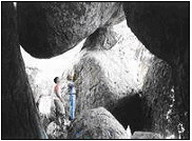 |
La Laguna has one of the biggest private
preserved areas of the country, where no cattle
is fed. We will spent a whole day birding in the
hilly area of “Cerro Catedral” (Catedral hill)
, highest point in Uruguay looking for other
forest birds like Dusky-legged Guan,
Scissor-tailed Nightjar, Sharp-tailed
Streamcreeper, Glaucous Blue-Grossbeak and
Chestnut-backed Tanager.
We also see open areas birds like Turkey and
Black Vultures, White-tailed Hawk, Red-legged
Seriema, Burrowing Owl, Field Flicker, White
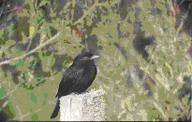
Monjita, Gray Monjita, Vermillion Flycatcher,
Tropical Kingbird, Fork-tailed Flycatcher,
Rufous-browed Peppershrike and Brown and Yellow
Marshbird. We will walk and hike the beautiful
hills to the natural small waterfalls and lagoon
that gives the name to the estancia. Depending
on the weather people can have a nice bath in
its absolutely fresh water. Typical candle
dinner and overnight at the estancia.
|
|
| Day
8:
: “Sierra de Caracoles”
hill and return |
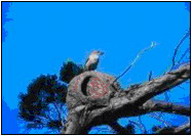 |
Early morning birding at “Sierra de los
Caracoles” near to La Laguna in search for
woodland birds like Gray-necked Wood-Rail,
Spot-winged Pigeon, Picazuro Pigeon,
White-tipped Dove, Guira Cuckoo, White-throated
Hummingbird, Mottled Piculet, White Woodpecker,
White-spotted Woodpecker, Green-barred
Woodpecker, Stripe-crowned Spinetail, Rufous-capped
Antshrike, Variable Antshrike, Small-billed
elaenia, Blue-billed Black-Tyrant, Crested
Black-Tyrant, Rufous-bellied Thrush,
White-browed Warbler, Diademed Tanager, Red-rumped
Warbling-Finch, Yellow-rumped Marshbird and
Chopi Blackbird.
At sunset, we will look for owls such as the
Tropical Screech-Owl. Traditional lunch and
drive to the airport or pre arranged extensions |
|
| |
| |
Guides’ background
Agustin
Carriquiry:
He was born in Uruguay in 1959, and he
has been birding Uruguay for more than 30 years. He
joined AVES URUGUAY, the Birdlife Association in
Uruguay, in 1987, and he has been its president for the
last four years. He has collaborated in the most
important books about birds of Uruguay published in the
last ten years, and his photographs illustrate them. A
serious birdwatcher, he has become an experimented
guide, leading tours for visitors from USA and Europe,
in the last 3 years.
Juan
Carlos Gambarotta:
He was born in Uruguay in 1960. Since 19
he has traveled a lot in South America’s
wilderness. Graduated as a National Park
Ranger in Bariloche (Argentina) he has been in charge of
the Laguna de Castillos Protected Area since 1991. He
has attended events related to nature conservation in
Mexico, Costa Rica, Venezuela, Dominican Republic,
Poland, Japan and South Africa. He organized the study
of bird colonies in the Uruguayan Scientific Base (Base
Artigas) in Antarctica. He has been a nature guide for
Elderhostel programs in Uruguay for 5 years. He has
written and illustrated ten books, (tenths of thousands
sold) nine of them for children about Uruguayan
environment, and native animals and plants which are
very used in schools in the country. A serious
birdwatcher, has added five new species to the Uruguayan
avifauna.
Adrian
Stagy:
He was born in Uruguay in 1968) is
Bachelor of Science (Biological Sciences), member of
Aves Uruguay-G.U.P.E.C.A. (Uruguay Group for Study and
Conservation of Birds - Birdlife Uruguay) and between
1989 and 2003 he had been collaborator in the Department
of Vertebrate Zoology in the Faculty of Sciences. He has
been active as a field Ornithologist in Uruguay and has
worked in most parts of the country. He has
participated in many expeditions or coordinated surveys
of the avifauna of South America (Argentina, Bolivia,
Brazil, Ecuador, Seabirds around Falklands Island or in
the Uruguayan waters) and in others part of the world
(Australia, Hawaii, New Zealand and South Africa).
|
|
F.A.Q.
Accommodations: The accommodations provided in
this program include the most interesting and charming
hotels, lodges and ranches available in the areas we
visit, all of which include private bathroom. They are
clean, comfortable and provide a very good service. You
will be able to get good night’s sleep in pleasant
surroundings. If you are sharing your room, please let
us know in advance if you prefer twin or double beds.
Natural Meals: After a full day riding, it is
comforting to know that you can return to fully prepared
meals that reflect the local cuisine. All meals are
prepared with completely natural and fresh products of
the region. Red meat, fish and wine are specially
recommended.
Climate: The weather in Uruguay is variable, but
you can expect somewhat warm spring and autumn
temperatures, although we might also get some cool days
(especially early in the morning or at night) and
perhaps some rainy days too. The average temperature at
this time of year is 65 F, average lows are 54 F, and
average highs are 74 F.
Clothes and Equipment: Clothes and equipment
should be light to accommodate for riding. You will also
need: Sun block, insects repellent, a warm coat, jacket
or sweater, hat (sun/rain), footwear (boots or sneakers)
bathing suit and wet weather gear for the eventuality
of rainy days. Don’t forget to bring your camera and
binoculars. Remember that as your bags will be transfer
from accommodation to accommodation by car, you can pack
as much cloth as you want to feel comfortable.
Emergencies: In case of accident, our guides will
always carry a mobile phone which they will use to
contact local assistance. All of the towns along our
route count on a medical emergency service.
Health services: In general, public sanitation
and health care in Uruguay are very good. In the event
of illness or accident during your stay, you should be
prepared to pay for assistance. Upon return home you can
submit a claim for reimbursement according to the
specifications of your insurance policy. Visa and Master
card are credit cards commonly accepted.
Safety: The places we will be visiting in the
countryside are completely safe.
Contact us:
info@lares.com.uy
|
|