| |
Nature &
Culture
Uruguay, a
journey through the land of the Gaucho, fresh water and
colorful birds
THE
COUNTRY: " A cultural adventure for nature lovers"
Uruguay
is a virtually
unexplored destination for traditional tourism. This
small and peaceful country offers nature lovers an amazing
variety of ecosystems mainly concentrated in the “Bañados
Del Este” Biosphere Reserve (UNESCO). A unique place where,
within short distances we can find: wetlands, hills,
native forest, palm groves, sandy and rocky beaches, rivers,
coastal lagoons and savannahs, all filled with an
enormous diversity of birds – more than 400 species-
and other wildlife like the endangered capybara, pampas
deer, sea turtle and
franca whale among others, which coexist in harmony with the
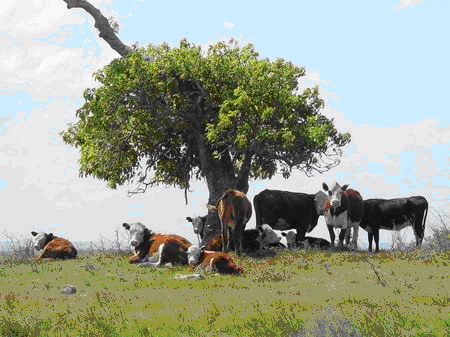
cattle, sheep and horses that populate the vast pampas. The
country occupies the sixth position in the Environmental
Sustainability World Index 2002.
 Situated
on the undefined frontier between the Spanish and Portuguese
empires, it has always been a region of passing influences;
thus the hospitable character of its people. First
conquerors and then the immigrants, who arrived from Europe
in large waves during the first half of the last century,
have enriched the native traditions, forging a very
particular cultural identity different from the majority of
Latin American countries. Indigenous remains, fortresses of
the Colonial period and traces of the gaucho's life have
combined with a rich urban architectural heritage. Situated
on the undefined frontier between the Spanish and Portuguese
empires, it has always been a region of passing influences;
thus the hospitable character of its people. First
conquerors and then the immigrants, who arrived from Europe
in large waves during the first half of the last century,
have enriched the native traditions, forging a very
particular cultural identity different from the majority of
Latin American countries. Indigenous remains, fortresses of
the Colonial period and traces of the gaucho's life have
combined with a rich urban architectural heritage.
Uruguay has the highest literacy rate in the continent - 97%
- and the majority of the population has completed
secondary, technological or university studies. Commonly
called “the Switzerland of America” this republic, proud of
its almost 200 years of democracy is one of the safest
countries in the world
URUGUAY - NATURE & CULTURE
– 10 days
|
Dates |
Lenght |
Tour cost *Double
occupancy |
Optional single
supplement |
Group size |
|
South
Spring season: October - December
South
autumn season: February - April |
9 nights / 10 days |
U$S
2.400
|
+300 |
min 6
max 16 |
|
*Included
All accommodations; all meals; water; land
transportation; hotel & restaurant tips; grooms and
guide services. |
*Not Included
Airfares, airport taxes; items of a personal nature
(souvenirs, phone calls, etc.); drinks and medical
insurance. |
|
Extensions
in Uruguay (Montevideo - Punta del Este) , Argentina
(Buenos Aires - Iguaçu Falls ...) and Brazil are
easily arranged. |
TOUR OUTLINE
|
Blanketed by Wetlands, native forest, coastal
lagoons, palm groves and sandy and rocky beaches,
you will be able to feel connected with the
traditions of this unexplored country. On this
leisurely walk we'll skirt the most diverse
landscapes and experience the hidden treasures found
on paths less travelled.
Visit historic Ranches, enjoy breathtaking landscapes,
and get to know the people who have lived here for
generations. |
|
This
tour has been especially designed for people who
love to learn and experience nature, cultures and
traditional meals without sacrificing comfort.
It
has native guides and scientists, who, along with
the local people, will help each visitor, experience
the wonders of this country, immersed in a safe,
friendly and natural environment. |
IMPORTANT NOTES
 Lares terms & conditions apply. Lares terms & conditions apply.
A booking is confirmed only upon receipt of the corresponding deposit.
We reserve the right to alter the itinerary due to circumstances beyond our control.
Appropriate medical insurance is mandatory and the responsibility of each guest/booking agent.
Guests will be required to sign a responsibility release before starting a tour.
Guests comments and pictures may be use for promotion.
DAY BY ITINERARY:
Pre/post tour extensions in Montevideo, Punta del Este, Buenos Aires/Argentina & Brazil available. Please ask for details.
| Day
1:
Montevideo, the capital city & Tango
|
 |
Guests are met at the Carrasco
International Airport by a bilingual guide and
driven along the
wonderful coast line called “Rambla”
to
the
Balmoral Hotel.
We will immerse ourselves in
Uruguayan culture in
Montevideo, the most important city as well
as the capital. In the evening, we will
experience the typical Rio de la Plata music,
the tango or Candombe with the typical rhythms
and typical coloured costumes while we have the
welcome dinner. L, D.
|
|
| Day
2:
Mercado
del Puerto, walking tour through the Old City & Punta
Del Este |
|
After breakfast, we will enjoy a city tour
through Montevideo.
We will visit antique shops, go through the city
visiting the most important historical and
cultural sites like the “Legislativo Palace”,
the “Carriage Monument” and the different
neighbourhoods like Carrasco, Punta Gorda,
Pocitos and Punta Carretas with their historic
anecdotes and different characteristics, we will
also visit and walk through the downtown city’s
streets and
have lunch at the famous “Mercado Del Puerto”.
We will then depart to
Punta Del Este,
the beach resort for the more elite South
Americans. Argentineans come across the wide
‘Rio de la Plata’ estuary to sun themselves
here. We will make a stop in Piriápolis, where
we will enjoy the lovely “Rambla” along the
coast and go up the “San Antonio Hill” from
where we will have the chance to take some
pictures of the incredible view. This European
style summer resort was founded by the visionary
Francisco Piria during the last century. We will
then continue our trip to the famous
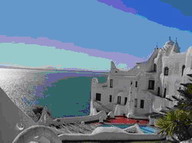
“Casapueblo” in Punta Ballena, our last stop
before reaching Punta Del Este, where we will
visit the Museum of Carlos Páez Vilaró,
Uruguayan painter and creator of Casapueblo. We
will then continue our trip to Punta Del Este
where we will sleep at one of the charming Inns
at “La Barra de Maldonado” (or similar). CB, L,
D
|
|
| Day 3:
Guardia del Monte, the
Ombúes & La Pedrera (horse riding, birding & fishing) |
 |
After breakfast we will be driven
east along a panoramic road into Rocha, arguably
the most beautiful province in Uruguay with its
pristine beaches, emerald shores and network of
lagoons.
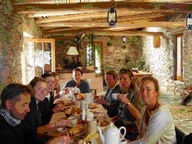
Our first visit will be “Guardia
Del Monte”, a small charming working ranch
on the shores of “Laguna de
Castillos". We will have the opportunity to
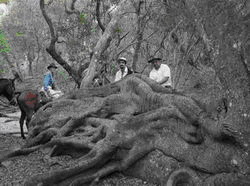
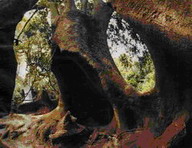
visit the forest of Ombúes. The Ombú curiously
rarely grows in groups of more than 2 or 3; the
forest of Ombúes that we visit is possibly the
only one in the world. Each tree has its own
wonderful shape with thick, twisting roots
spreading out over the ground; some are over 500
years and have a diameter of 2 meters (6 feet).
In the afternoon, we will be
driven to La Pedrera,
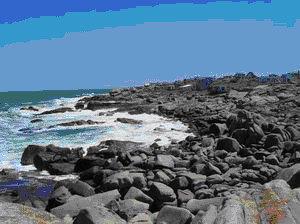
a tiny coastal village, part of a
chain of bays with sandy beaches and rocky
capes.
Our hotel here overlooks the
ocean and is equipped with a heated swimming
pool. During the evening we will enjoy a typical
dinner with a traditional folk show.
CB, L, D.
|
|
| Day 4:
Cabo Polonio & the Sea
Lions Natural Reserve (walking,
ocean swimming) |
 |
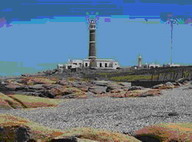
Today we will visit “Cabo
Polonio”, named after a Spanish galleon that
went down just off the point. Luckily ‘Beagle’
with Charles Darwin aboard did not succumb to
this fate and Darwin spent quite some time in
Uruguay collecting species and most likely
starting to formulate his theories of evolution.
This charming fishing village can only be
reached by horse or four wheeled drive and the
fascinating part of this visit is the huge area
of shifting sand dunes; as we drive through it
is possible to imagine that we are right in the
middle of the Sahara. Arriving at the ocean, we
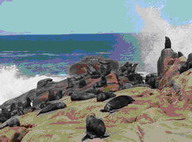
will see sea lions that populate the small
islands and make up one of the largest
populations in the world; very occasionally we
spot a migrating Franca Whale. After a fresh
fish lunch at the sea side restaurant, most
likely (but this will depend on tides and water
levels and will be decided on the day) there is
a boat ride along the river joining ‘Laguna de
Castillos’ to the sea and visiting the largest
Ombú forest of South America. After this ride
full of surprises and diverse scenery, we spend
the night in the town of “La Coronilla”, where
we will have a delicious dinner, Uruguayan wine
and a pleasant overnight listening to the waves
CB, L, D. |
|
| Day 5:
Santa Teresa national park, Don Bosco
palm groves & Black lagoon
(walking
and optional short hiking)
|
|
Today we will visit the immense
Santa Teresa National Park. The centre piece of
the park is a fort started in 1762 by the
Portuguese to defend the edge of their
territories then completed by the Spaniards who
took it by assault just a year later. This was
just the start of a succession of conquering,
loosing and reconquering the fort; it was not
until 1825 that the newly forming ‘Uruguay’
finally captured and held the fort.
The fort is surrounded by 3000
hectares of forest containing over 2 million
trees the majority from other parts of the
world. We will be driven along a very scenic
road near to the famous " Laguna Negra" -
‘black lake’ where we will have a traditional
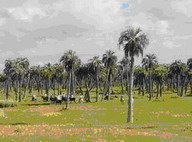
pic-nic on its shores and visit the Don Bosco
hills from where we will be able to enjoy an
incredible view of the unique extensive palm
groves. Despite a number of stories, no one
knows how the palm trees got here -some 300
years old; they are not native but they give the
landscape a very exotic look. During the trip we
will pass many roadside stalls selling the fruit
and the less innocent ‘hooch’ brewed from the
palm nuts. The cloudy, sticky liquid is so
potent that if you leave the cap off the old
bottles it is sold in the liquor evaporates in a
flash! We will walk along the “Path of the
Indian” where we will surely see ibis, herons,
egrets, storks and a legion of migrating birds
(birds arrive here from as far as Alaska and the
Falkland Islands). During the late afternoon, we
will drive to the “Fortín de San Miguel”. Once
inside the imposing walls of the hotel guests
will appreciate the comfortable rooms and enjoy
the delicious food, a distant cry from the
austere life in the fortress! Overnight at
Fortín de san Miguel. AB, L, D. |
|
| Day
6:
18th century Fort of San Miguel –
Brazilian border (walking, golf) |
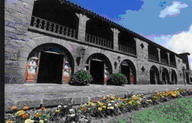 |
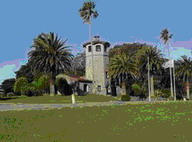
After having breakfast in this hotel built in
the same stone as the nearby Portuguese
fortress, after breakfast, we will drive a short
way to ‘Chuy’, a very curious town straddling
the border where guests can step into Brazil and
hear the locals speak a strange language made of
a mix of Spanish and Portuguese. After lunch we
will be able to admire the views out across an
enormous stretch of fresh water - one of the
largest fresh water reserves of South America,
the "Merín Lagoon". We are right on the
Brazilian border. After lunch, we will make an
archeological visit to observe the “Cerritos de
Indios”, the National Park of San Miguel which
surrounds the fort and constitutes a very
important natural reserve and to the “Picudo
Hill” from where we will be able to enjoy a
great panoramic view of the area. The view
across the flat lowlands and the huge lagoon
provides a very special landscape very difficult
to describe. We can smell the sea and on clear
days view the coast. This area is home to a wide
variety of birds and we will see many different
native trees and bushes. Guests can visit the
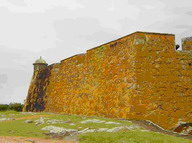
pink granite fortress built in 1734 by the
Spaniards, rebuilt after its destruction by the
Portuguese in 1737. We will also have the chance
to see the Cimarron cattle – the first cattle,
introduced from Spain in the 17th century and
depending on what the gauchos are doing, they
may need a hand to work these tame animals. We
will stay at the “Fortín de San Miguel", guests
can enjoy the gardens and visit the ‘Pulpería’ -
the traditional meeting point for the gauchos
from miles around. Overnight at El Fortín de San
Miguel. AB, L, D |
|
| Day
7:
Salamanca grottoes, Minas & Florida
province |
|
After breakfast we will be driven north-east
along a panoramic road through the province of
“Lavalleja” and into the State of Florida, the
most traditional cattle breeding area of the
country. We will stop at the “Salamanca
grottoes” an amazing place and have lunch on the
charming city of Minas. Then we will get to the
town of Cerro Colorado, where we will find San
Pedro de Timote, considered on of the first
estancias founded in Uruguay (estancias are like
colonial haciendas). The original colonial main
building has been declared a National Historical
Monument and guests can still see features that
are a reminder of the age of the estancia: the
church, towers and wonderful terraces decorated
with Spanish majolica. This handsome period
house has been totally refurbished to represent
the most elegant colonial era in the country.
The delicious meals are based on the traditional
Uruguayan cuisine. During dinner, guests can get
acquainted with one of Uruguay’s best kept
secrets: the excellent wines. Overnight at the
estancia – swimming pools, sauna & Jacuzzi. AB,
L, D
|
|
| Day 8:
San Pedro de Timote - the
‘prairies’ of the oldest estancia (horse riding,
walking, bike riding) |
|
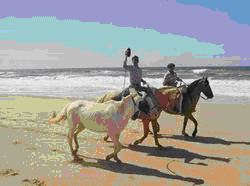
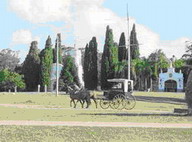
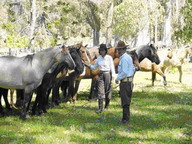
In the morning we will set out in
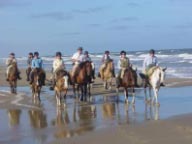
a horse ride (or carriage stroll) across the
estancia fields, through eucalyptus forests and
onto the typical ‘prairies’ of central Uruguay.
The estancia once covered an area of 30 000
hectares (66 000acres) but is now 2600 hectares
(5750 acres). There is a big chance of seeing
some of the typical wildlife likely to the
capybara (largest rodent in the world and very
cute!), armadillos and the rare marsh deer and
other wildlife if we join the nocturnal outing
from the estancia after tea time. During the
afternoon, guests will have the opportunity to
explore the estancia ride horses or relax in
the pools or Jacuzzi. Optional nocturnal animal
watch. Overnight at San Pedro.
AB, L, D. |
|
| Day 9:
Colonia del Sacramento, where history
whispers. |
 |
We start our day with an early
drive to the historical city of “Colonia Del
Sacramento”, declared World Heritage by the
UNESCO. This romantic city is the only one
founded by the Portuguese in the coasts of the
“Rio de la Plata”, during the times of the
battles for the frontiers between the Spanish
and Portuguese Crowns, who wanted to expand
their territories. As a consequence, “Colonia
Del Sacramento” has been, from the very
beginning, a place of battles and conflicts. The
city changed its nationality many times during
the past. Because of the above mentioned, many
different architectonic styles can be found
along the small city form both Spanish and
Portuguese influence.
In the past, “Colonia Del
Sacramento” was surrounded by a tall stone wall
built in the same time as the entrance, the moat
and the bridge. During the early afternoon we
will enjoy an interesting guided walking tour
around the city. We will also visit the “Real de
San Carlos” and enjoy the panoramic view of the
“Rio de la Plata” that separates Uruguay from
Argentina (a few kilometers away). Overnight at
the charming Plaza Mayor Hotel, a typical small
hotel in the old part of the city where the
original walls built during the 19th
Century are still preserved. We will enjoy
dinner at one of the traditional restaurants in
the area. AB, L, D. |
|
| Day 9:
Return |
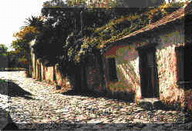 |
Free time to explore the old
city. Alter lunch, guests will be driven to the
port to take the ferry to Buenos Aires or driven
to Montevideo. |
|
F.A.Q.
Guides: Depending on the group size, this tour is
lead by one or two local English speaking and
experienced guides who are knowledgeable of the region.
Our guests will enjoy both the natural environment and
the affection and professionalism of our guides.
Special guides: Along the way, local specialists
will give us some conferences and/or share fieldtrips,
in order to improve our understanding of Uruguayan
history and the typical ecosystems.
Accommodations: The accommodations provided in
this program include the most interesting hotels or
lodges available in the areas we visit, all of which
include private bathroom and are clean, comfortable, and
very attractive. You will be able to get good night’s
sleep in pleasant surroundings. If you are sharing you
room, please let us know in advance if you prefer twin
or double beds.
Natural Meals: After a full day of immersing
yourself in our natural sights, it is comforting to know
that you can return to fully prepared meals that reflect
the local cuisine. All meals are prepared with
completely natural and fresh products of the region.
Shows and cross cultural activities: In
Montevideo we will participate in a tango show and along
the way we will enjoy different shows of local folklore.
Climate: The weather in Uruguay is variable, but
you can expect somewhat warm spring and autumn
temperatures, although we might also get some cool days
(especially early in the morning or at night) and
perhaps some rainy days. The average temperature at this
time of year is 65 F, average lows are 54 F, and average
highs are 74 F.
Clothes and Equipment: Clothes and equipment
should be light to accommodate for out-door activities.
A warm coat, jacket or sweater, hat, raincoat and, also,
bathing suit and rubber boots for the eventuality of
rainy days are recommended. Don’t forget to bring your
camera and binoculars.
Land Transportation: Transfers from site to site,
field trips and excursions will be by private, air-
conditioned/heated motor coach with a restroom on board.
Distances within Uruguay are not great and the longest
bus ride between sites takes three hours. We will play
some videos on the way, but if you enjoy reading we
recommend bringing a good book.
Free Time: Special care has been taken to provide
enough free time to rest and to do independent
activities. If you like to fish, there will be several
opportunities throughout the tour.
Health services: In general, public sanitation
and health care in Uruguay are very good. In the event
of illness or accident during your stay, you should be
prepared to pay for assistance. Upon return home you can
submit a claim for reimbursement according to the
specifications of your insurance policy. Visa and Master
card are credit cards commonly accepted.
Safety: Although Montevideo is a safe city, we
will have to take some precautions. The places we will
be visiting in the countryside completely safe.
Contact us: info@lares.com.uy
|
|